In the world of electronics, inductors are crucial components that play a vital role in energy storage, filtering, and controlling current in circuits. Among the wide range of inductor core materials available, high-precision air gap amorphous cores have emerged as a game-changer, particularly for applications requiring high efficiency and stability. These cores are engineered with exacting tolerances and optimized material properties to deliver exceptional performance. Understanding the science behind these cores, particularly the role of air gaps, is essential for engineers and designers striving for reliability in electronic systems.
Understanding Amorphous Core Materials
Amorphous cores are made from non-crystalline metallic alloys, typically iron-based, that have a unique atomic structure. Unlike conventional crystalline metals, the atoms in amorphous materials are arranged randomly, which minimizes energy loss during magnetic cycling. This atomic disorder is key to their low coercivity and high resistivity, which dramatically reduces hysteresis and eddy current losses.
One of the most notable advantages of using an amorphous core is its inherent low energy loss during magnetization and demagnetization. This makes these cores ideal for applications that require high-frequency operation and continuous energy transfer, such as switch-mode power supplies, renewable energy inverters, and telecommunications equipment. When combined with an air gap, the performance of the inductor can be finely tuned to meet specific electrical requirements.
The Role of Air Gaps in High-Precision Cores
An air gap in an inductor core serves as a magnetic “buffer” that increases the core’s ability to store energy without saturating. The high-precision air gap is carefully calculated and manufactured to ensure consistency and repeatability, which is critical for reliability in sensitive electronic circuits. The air gap essentially allows the inductor to handle higher currents and maintain stable inductance across a wide operating range.
Air gaps also influence the magnetic permeability of the core. By introducing a non-magnetic gap, engineers can reduce the overall permeability, which helps prevent core saturation under high current conditions. This is especially important in power electronics, where fluctuating currents and voltage spikes are common. The precise control of the air gap ensures that the inductor delivers predictable performance and avoids issues such as overheating or magnetic distortion.
Low-Loss Air Gap Amorphous Ring Core for Inductors
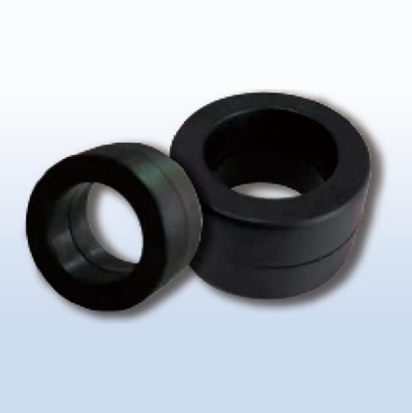
A specific design that has gained attention is the low-loss air gap amorphous ring core for inductors. This design combines the benefits of amorphous materials with the controlled energy storage of an air gap, providing superior efficiency and reliability. Ring-shaped cores allow for uniform magnetic flux distribution, reducing hotspots and minimizing the risk of localized saturation. This geometry also simplifies winding and reduces leakage inductance, which is critical in high-frequency applications.
Low-loss air gap amorphous ring cores are particularly valuable in industrial and high-performance electronics, where even minor energy losses can translate into significant heat generation and efficiency drops. By minimizing losses, these cores not only improve the operational efficiency of devices but also extend their lifespan. Additionally, the reduced thermal stress helps maintain the stability of other sensitive components in the circuit.
Manufacturing Challenges and Precision Engineering
Producing high-precision air gap amorphous cores requires advanced manufacturing techniques. The amorphous ribbons used to form the cores are extremely thin, often in the range of 20-30 micrometers, and must be wound and bonded with meticulous care to maintain uniformity. Any variation in thickness or air gap size can drastically affect the magnetic properties of the core, leading to inconsistent performance.
The creation of the air gap itself demands precision machining and exacting quality control. Modern manufacturing uses laser cutting, precision grinding, and high-accuracy assembly to achieve tolerances that are often within micrometers. This level of precision ensures that each core meets strict specifications for inductance, saturation current, and loss characteristics, which is essential for reliable operation in high-stakes applications.
Impact on Electrical Reliability
The combination of low-loss amorphous material and a precisely engineered air gap directly contributes to the reliability of inductors in several ways. First, it ensures stable inductance under varying load conditions, which prevents circuit malfunction and voltage fluctuations. Second, the reduction in core losses minimizes heat buildup, which protects both the inductor and surrounding components from thermal stress. Third, precise air gap control reduces the risk of magnetic saturation, which could otherwise cause signal distortion or device failure.
High-precision air gap amorphous cores are particularly important in applications such as power conversion, renewable energy systems, and communication devices, where reliability is paramount. In power electronics, for instance, sudden current spikes or prolonged high-load operation can push conventional cores into saturation, leading to efficiency loss and potential damage. The use of a low-loss air gap amorphous ring core mitigates these risks by providing consistent magnetic performance under all operating conditions.
Applications and Benefits
Industries across the board have started to recognize the value of high-precision air gap amorphous cores. In renewable energy systems, such as solar inverters and wind turbine converters, these cores help maintain high efficiency and reduce energy losses, ultimately improving the overall performance of the system. In telecommunications, stable inductance and low electromagnetic interference (EMI) are critical for signal integrity, and these cores deliver on both fronts.
Other benefits include a reduction in cooling requirements, since low-loss cores generate less heat. This leads to more compact designs and lower operating costs. The enhanced durability of amorphous cores also reduces maintenance requirements, ensuring long-term reliability in demanding industrial environments.
Future Trends in Core Design
As electronics continue to evolve toward higher frequencies, higher power densities, and stricter efficiency standards, the demand for advanced inductor cores will only increase. Research into new amorphous alloys and composite materials aims to further reduce core losses and improve thermal stability. Advances in precision manufacturing, including automated laser assembly and AI-driven quality control, are also expected to improve the consistency and performance of high-precision air gap cores.
In addition, the integration of simulation and modeling tools allows engineers to design cores with optimized air gaps for specific applications, reducing trial-and-error and shortening development cycles. These innovations are likely to make high-precision air gap amorphous cores a standard choice for next-generation electronic devices.
Conclusion
The science behind high-precision air gap amorphous cores combines advanced materials, precise engineering, and deep understanding of magnetic behavior. The careful design and manufacturing of low-loss air gap amorphous ring cores for inductors not only enhance electrical efficiency but also significantly improve reliability. From industrial power systems to high-frequency electronics, these cores play a critical role in ensuring stable, efficient, and long-lasting performance. By embracing these technologies, engineers can meet the growing demands for reliable and energy-efficient electronic systems, paving the way for more resilient and high-performance devices across various industries.