Manufacturing processes have evolved over centuries to meet the growing demands for precision, efficiency, and material optimization. Two prominent techniques in the field of metal fabrication are metal sintering and casting. Each process has unique characteristics, advantages, and limitations, making them suitable for different applications. Understanding their distinctions is essential for engineers, designers, and manufacturers seeking the optimal method for their projects.
Overview of Metal Sintering
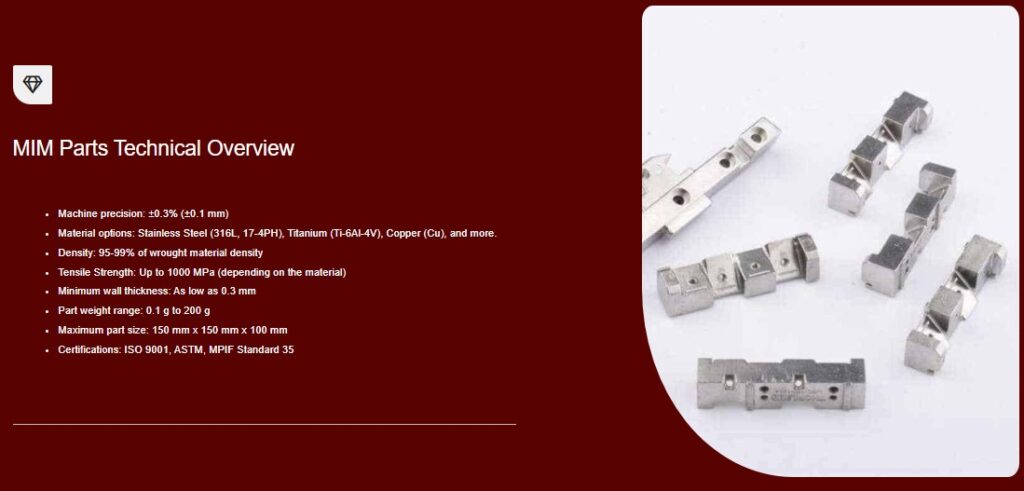
Metal sintering is a powder-based manufacturing process where finely powdered metal is compacted and heated below its melting point to form a solid piece. The heating process causes the metal particles to bond at a microscopic level, creating a dense, cohesive structure. Unlike traditional melting processes, sintering does not fully liquefy the material, which reduces the risk of defects such as shrinkage or warping.
This process is widely used in producing complex parts that require high precision and uniformity. Common applications include automotive components, aerospace parts, medical implants, and industrial machinery. Metal sintering allows for the fabrication of intricate geometries that are difficult or impossible to achieve using conventional casting methods.
Overview of Casting Processes
Casting, on the other hand, is a process where molten metal is poured into a mold, allowed to solidify, and then removed to obtain the desired shape. The technique has been in use for thousands of years, producing components ranging from small decorative items to large structural parts. Casting relies on complete melting of the material, which enables it to fill molds of almost any shape.
There are various casting methods, including sand casting, investment casting, die casting, and centrifugal casting. Each method offers different levels of precision, surface finish, and production speed. Casting is particularly advantageous for large-scale production, as molds can be reused multiple times, and the process is generally faster than sintering.
Material Utilization and Efficiency
One of the key differences between metal sintering and casting is material utilization. Metal sintering is highly efficient in minimizing waste because it uses precisely measured metal powders. Any excess powder can often be recycled, making the process both cost-effective and environmentally friendly. This efficiency is particularly valuable when working with expensive metals such as titanium or cobalt-chrome alloys.
Casting, by contrast, typically produces more waste. Molten metal may require trimming, machining, or surface finishing to achieve the final dimensions. Additionally, molds can degrade over time, resulting in material loss. While casting allows for larger parts, it often demands higher quantities of raw metal, which can increase overall production costs.
Precision and Surface Quality
In terms of precision, metal sintering generally outperforms traditional casting techniques. The compaction and controlled heating in sintering result in highly uniform parts with tight tolerances. Complex shapes, fine details, and internal structures are achievable without additional machining. This makes sintering a preferred choice for applications where accuracy is critical, such as in medical devices or aerospace components.
Casting, although versatile, may require secondary processes like machining or polishing to meet high-precision standards. Sand casting, for example, often leaves rough surfaces and may have slight dimensional variations. Investment casting can achieve finer details and smoother finishes, but it is more labor-intensive and costlier than sintering in terms of precision.
Mechanical Properties and Strength
The mechanical properties of parts produced by metal sintering and casting differ due to the nature of the processes. Sintered metals often exhibit uniform density and predictable mechanical properties, although they may have slightly lower strength than fully melted and cast metals if porosity remains. However, post-sintering treatments such as hot isostatic pressing can improve density and strength, making sintered components comparable to cast ones in performance.
Casting, particularly when using high-quality molds and controlled cooling, can produce components with excellent mechanical properties and strength. Metal solidification in casting allows for the formation of large, cohesive grains, which can enhance toughness and durability. However, rapid cooling or uneven solidification may result in defects such as shrinkage, porosity, or residual stress, which can compromise strength.
Design Flexibility and Complexity
Design flexibility is another significant factor when comparing metal sintering and casting. Metal sintering allows for complex geometries, hollow structures, and thin walls without the limitations of mold-making. This freedom makes sintering ideal for lightweight components and designs with intricate internal features, which are difficult to achieve using casting.
Casting, while versatile in size, has some limitations in complexity. Mold-making requires careful planning to ensure proper metal flow and avoid defects like air pockets or incomplete filling. Certain intricate shapes may necessitate multi-part molds, increasing production time and cost. Despite these challenges, casting remains unmatched for producing large or heavy components where sintering may not be feasible.
Cost Considerations
Cost is a decisive factor when choosing between metal sintering and casting. Sintering can be more cost-effective for small to medium production runs, especially when complex geometries or high-precision parts are required. The ability to reuse metal powder and minimize machining reduces both material and labor costs. However, initial equipment investment for sintering can be high, particularly for industrial-scale operations.
Casting, in contrast, benefits from economies of scale. For high-volume production, casting can be more economical due to rapid mold reuse and faster cycle times. However, costs can escalate for small or highly detailed components because of the additional machining and finishing required to meet precision standards.
Environmental Impact
Environmental considerations are increasingly important in manufacturing. Metal sintering tends to be more environmentally friendly because it minimizes material waste and often uses recycled powders. Additionally, the lower energy requirements of sintering, compared to melting large volumes of metal for casting, contribute to reduced carbon emissions.
Casting processes can have a larger environmental footprint due to energy-intensive melting, waste from mold materials, and post-processing requirements. Advances in green casting techniques, such as biodegradable molds and improved recycling of scrap metal, are helping mitigate some of these impacts.
Applications and Industry Use
Both metal sintering and casting have distinct industry applications. Metal sintering is commonly used in precision engineering sectors, including aerospace, automotive, electronics, and medical devices. The ability to create complex, lightweight, and high-tolerance parts makes it indispensable for advanced engineering applications.
Casting dominates in industries where large-scale production and heavy-duty components are required. Construction, shipbuilding, industrial machinery, and automotive manufacturing often rely on casting for components such as engine blocks, gears, pumps, and structural frames.
Conclusion
In conclusion, metal sintering and casting are complementary manufacturing processes, each with unique advantages. Metal sintering excels in precision, complex geometries, material efficiency, and environmentally conscious production, making it ideal for high-tech and specialized applications. Casting offers flexibility in part size, excellent mechanical properties, and cost efficiency for large-scale production.
Choosing between metal sintering and casting requires careful consideration of factors such as design complexity, production volume, material type, mechanical requirements, and environmental impact. By understanding these differences, manufacturers can optimize performance, reduce costs, and achieve high-quality results in metal fabrication.
Both techniques will continue to evolve with technological advancements, including additive manufacturing, improved sintering methods, and sustainable casting practices, shaping the future of metal production for years to come.
The role of metal sintering in modern manufacturing highlights the shift toward precision, efficiency, and sustainability, while casting remains a cornerstone for producing robust and large-scale components. Together, these processes provide a versatile toolkit for meeting the diverse demands of contemporary industry.