Italy is a major trading region of the European Union, supported by a diversified manufacturing sector, a strategic Mediterranean location, a strong industrial base, and deep integration with European and international markets. The country is popular mainly because of its extensive commercial relationships across Europe, Asia, North America, and the Middle East. The positioning of Italy within the European Union has strengthened the regional supply chain of the country.
Italy Bill of Lading Data provides valuable visibility into the movement of goods, driving overall marketing growth rate. The shipment-level information helps companies with examination of product movements, buyers, and supply relationships. Progressive traders can get the proper evaluation of the potential customers and suppliers for identification of the emerging market opportunities. The significant Italy trade data, latest Italy import-export data, and Italy export trade data provide complementary perspectives for the country’s commercial activities. These resources help businesses understand import requirements, export trends, and identify international trading partners for market growth.
THE SIGNIFICANT ROLE OF ITALY IN GLOBAL TRADE
Italy holds an important position in global commerce because of its strong manufacturing ecosystem and diversified industrial structure. Machinery, automobiles, pharmaceuticals, chemicals, and beverages are the main components of the international trade portfolio. The location of Italy in southern Europe provides reliable access to major European markets and the Mediterranean trade routes. Ports and logistics connect Italian businesses with suppliers and customers around the world. The participation of the country in the European Union creates opportunities for companies looking for services across interconnected European supply chains.
Italy trade data helps businesses with a proper understanding of commercial relationships. Companies can examine the countries for the supply rate of products to Italy and the market purchasing Italian goods. This information supports decisions related to sourcing, prospecting, competitor analysis, and market expansion. The industrial structure is particularly valuable for companies looking for specialized manufacturing capabilities. Italian manufacturers maintain their recognition across areas like machinery, automotive components, luxury products, industrial equipment, and food processing.
THE COMPREHENSIVE OVERVIEW OF ITALY IMPORTS
The import market of Italy is supported by domestic consumption, manufacturing requirements, industrial production, energy demand, and the international supply chain. LatestItaly import-export data show that the country is mainly importing a wide range of raw materials, intermediate products, and machinery for effective trade of electronic equipment, vehicles, and consumer goods. Overall, it helps companies evaluate the products entering the Italian market with the origination country information. Businesses trying to be progressive can use the product-level information for understanding the demand rate and identification of potential buyers. The machinery and industrial equipment are also important because they support the manufacturing ecosystem of Italy.
The companies requiring advanced technologies, components, and production can update their portfolio as per the latest trade regulations. Electronics and electrical products are also supporting the industrial and consumer demand rate. Energy-related products are mainly important because of the international energy markets influencing the sourcing requirements. The food and beverage sector has created additional import opportunities. Businesses can even evaluate the movement of agricultural products, processed foods, and beverages for specialty products to understand the consumer and industrial demand. The Italy bill of lading data provides deeper visibility to the latest trade researchers, showing available shipment-level information.
THE EXPORT MARKET OVERVIEW OF ITALY
Italy has a highly diversified export portfolio with representation of the strength of manufacturing and specialized industrial sectors. Machinery, automobiles, and automotive components are the contributors to Italian international commerce. Italy export data provides businesses with the latest visibility into the products exported from the country. The exporters can use the information to identify markets where Italian products are strongly demanded. The reputation for high-quality manufacturing is also an important contributor to export competitiveness.
Italian companies maintain operations across numerous specialized industries including automotive manufacturing, food processing, furniture, and ceramics. The companies can use the Italy trade data for examination of the destination markets and identification of potential distributors. The companies can use the reliable Italy trade data for proper examination of potential distributors, importers, and business partners. The shipment-level information helps businesses understand the competitive activity of the latest trading authorities.
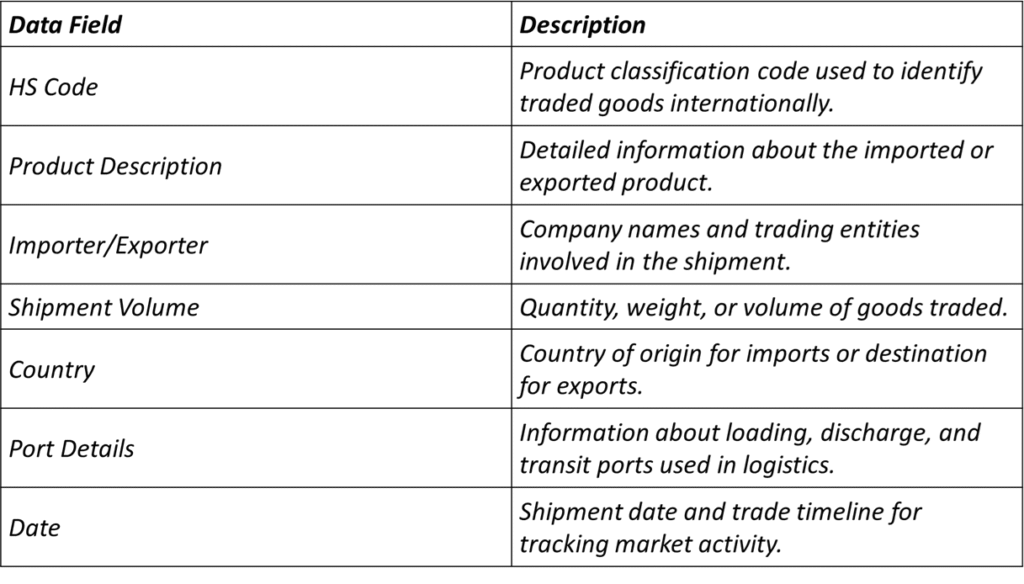
WHAT DETAILS ARE INCLUDED IN ITALY BILL OF LADING DATA?
THE EFFECTIVENESS OF ITALY TRADE DATA IN BUSINESS GROWTH
Italy Export Trade data is considered a staircase for progressive traders looking for marketing growth. Businesses can use the latest information to understand the structure of international commerce within the Italian market. Businesses can also identify the active importers, exporters, and manufacturers associated with specific products. The major benefit is targeted prospect identification. The data also support competitor monitoring. Companies can examine the competing suppliers, destination markets, and shipment frequency to understand the competitors’ position in the Italian market.
The supply chain analysis is another important contributor. Businesses can compare the supplier countries to identify alternative procurement strategies. It is also a valuable authority for manufacturers seeking to reduce dependence. The historical Italy import-export data helps companies identify changing demand trends. The comparison of trade activities supports businesses’ recognition of commercial opportunities and markets.
HOW DOES ITALY IMPORT-EXPORT DATA SUPPORT BUSINESS GROWTH?
- Identification of buyers and suppliers – Italy import-export data helps businesses identify potential buyers, suppliers, and exporters. The product descriptions and HS code allow the companies to get detailed prospects as per the specific product requirements.
- Competitor shipment monitoring – Italy bill of lading data helps businesses monitor available shipment activity. The businesses can even study the purchasing relationship for improvement of the competitive position.
- Market demand analysis – Historical Italy trade data enables businesses to examine purchasing patterns and product movement. The companies can compare the different product categories for identification of areas with increased commercial activity.
- Supply chain optimization – Italy customs data helps businesses with evaluation of sourcing relationships and comparison of supplier countries. Companies can use the information to develop alternative procurement strategies.
- Destination market analysis – Italy export trade data is beneficial because it supports visibility into international markets while maintaining the active purchase of Italian products. The exporters can use the information for the identification of promising destinations.
FUTURE TRADE OUTLOOK OF ITALY IMPORT-EXPORT DATA
The future of Italy’s international trade will be mainly backed up by the manufacturing demand rate, European economic conditions, energy prices, global supply chain, and technological investment. Advanced manufacturing is expected to be one of the important contributors to international competitiveness. The growing demand for machinery, industrial equipment, automotive components, pharmaceuticals, and specialized manufacturing will continue to create opportunities for international suppliers.
The strong food, fashion, furniture, engineering, and manufacturing product industries will continue to support export activity. The businesses mainly involved in the products are using the Italy export trade data for identification of destination markets and the valuation of the international demand rate. Supply chain diversification will influence future trade patterns. The companies can increasingly look for multiple sourcing markets for management of the logistic risk and improvement of resilience.
Conclusion
Italy will maintain its positioning as an important trader in international commerce because of the diversified manufacturing base, specialized industries, strategic geographical location, and integration with European and global supply chains. Italy bill of lading data and Italy export trade data will provide businesses with valuable intelligence for understanding the import and export ecosystem.
Companies can use the examination details of products, buyers, and suppliers for acknowledgement of shipment movement, sourcing countries, and destination markets. This latest dataset helps businesses identify potential buyers and suppliers, analyse market demand, and optimize sourcing strategies. The industries are maintaining their adaptation to a changing global supply chain, making it important for companies looking for sustainable business growth.
FAQs
Que – What is Italy bill of lading data?
Ans – Italy bill of lading data is categorized information on the shipment-level information of the country about goods moving through the international trade routes.
Que – How can our Italy import-export data support business growth?
Ans -Italy import-export data supports business growth via proper identification of buyers and suppliers, analysis of market demand, and development of effective market expansion strategies.
Que – What information is available in Italy trade data?
Ans -Italy trade data covers importer names, exporter names, shipment date, HS code, product details, quantity, values, pricing information, origin country, importing country, and port details.
Que – How frequently is the Italy trade data updated?
Ans -Italy trade data is updated on a monthly basis.
Que – Where can you obtain detailed information on Italy trade data?
Ans –Visit www.importglobals.com or email at info@importglobals.com for detailed updates on Italy trade data.